

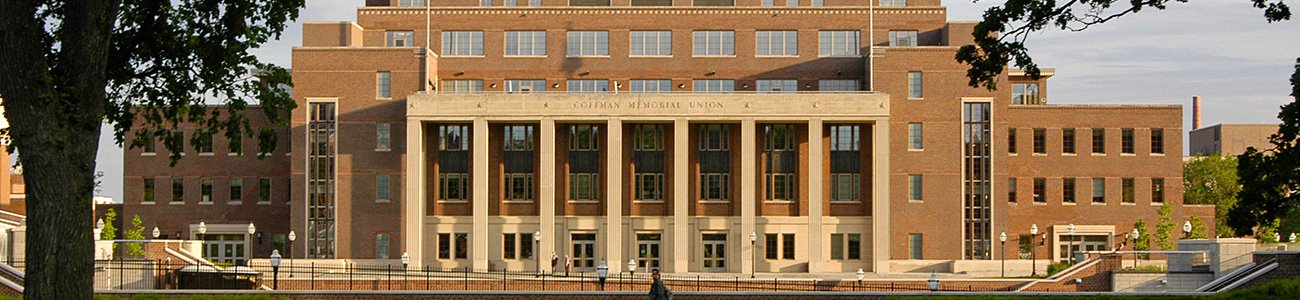
Coffman Memorial Union
- Building Hours
- Directions
- Directory
- Services
- Food & Drink
- Lounge & Study
- Cultural Centers
Coffman Memorial Union Building Hours
Coffman Memorial Union Directions
Coffman Memorial Union
300 Washington Ave. S.E.
Minneapolis, MN 55455
By Car
From the South
Take 35W and merge onto I-94 East and follow the I-94 directions below.
From the North
From 35W, take the University Avenue/4th Street exit. Turn left at University Avenue and head toward the East Bank. Turn right onto Oak Street, then right onto Fulton Street SE. Fulton Street becomes East River Road. Go down the hill and the East River Road parking garage entrance will be on your right.
From the East and West
Take the Huron Boulevard exit from I-94 (north exit only). Take first left onto Fulton Street SE. Fulton Street becomes East River Road. Go down the hill and the East River Road parking garage entrance will be on your right.
By Bus
The University of Minnesota offers free campus shuttles between the West Bank, East Bank, and St. Paul campuses. Check the Parking and Transportation Services website for shuttle schedules.
From St. Paul Campus
Shuttles depart in front of the St. Paul Student Center on Buford Avenue. Trip time to Coffman Union is approximately 15 minutes.
From West Bank Campus
From the West Bank, shuttles stop at the lower level of Blegen Hall on Washington Avenue. When you arrive at the Coffman Union stop, walk south to arrive at Coffman Union. Trip time to Coffman Union is approximately 5 minutes.
Departing Coffman Union
Shuttles depart in front of the building on Washington Ave.
Parking
Coffman Disability and Short-term Parking
The 1,900 space East River Road Garage provides both disability and short-term parking for Coffman and the East Bank campus. With an attached entrance to the south side of the building, the East River Road Garage is easily accessible from Delaware Street. For rates and maps please visit Parking and Transportation Services.
Loading Docks
Coffman Memorial Union has two loading docks, one next to each entrance on the east and west sides of the building. For loading dock utilization, please contact the Event Services office at 612-624-9954. Parking at the loading docks is prohibited and Parking & Transportation Services will ticket if necessary.
If you have questions about these options, please contact Parking and Transportation Services (612-626-7275 or parking@umn.edu).
Coffman Memorial Union Building Directory
Basement
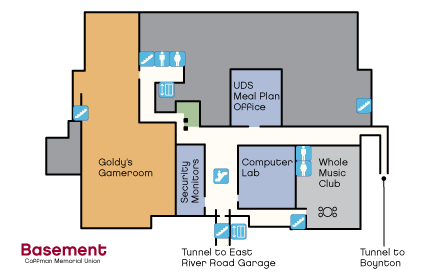
Ground Floor
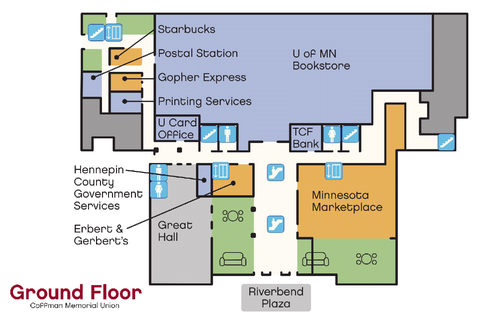
First Floor
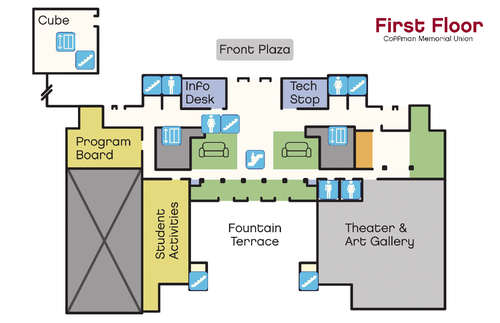
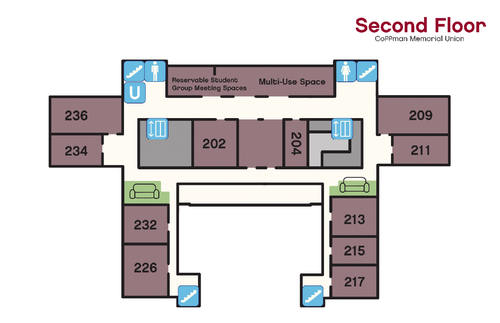
Second Floor
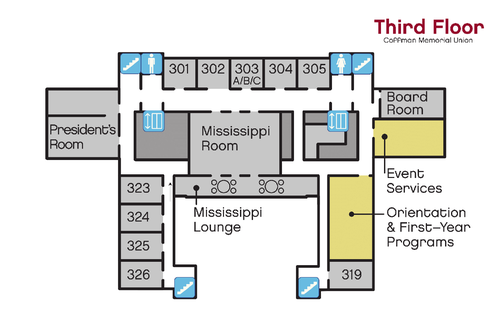
Third Floor
Coffman Memorial Union Services
Locker Rentals
The student union locations rent out lockers around campus for your convenience. To reserve a locker, fill out the Locker Rental Contract and print it for your records. Locker rentals start on the contract start date.
Once you have filled out this form, you must bring your U Card to the Coffman Post Office to complete the rental process. Appropriate locations are listed below:
- East Bank & West Bank rentals: Return the contract to the Coffman Union Post Office on the ground floor
- If you need further assistance, contact sualockers@umn.edu

Printing Services
Offers the convenience of a full-service copy center, including full serve B/W and color copying, digital and full-color printing, and more.

Technology Help
A central location for students, faculty, and staff to receive face-to-face technology support.
U Card Office
The U Card Office provides the official University of Minnesota ID Card as well as administers the Gopher GOLD value program–the only way to pay for printing on campus.

Postal Station
Buy stamps and mailing supplies and mail letters and packages at this on-campus postal station.
Coffman Memorial Union Food & Drink
Gopher Express
Gopher Express is your convenient on-campus option for meals, snacks and beverages on-the-go. This convenience store offers many vegan, gluten-free and organic food options, as well as craveable classic snacks and soft drinks.
Goldy’s Gameroom
Enjoy bowling, billiards, arcade games, and a full-service snack bar at Goldy’s Gameroom.

Campus Club
The Campus Club provides an inviting ambiance for an enjoyable members-only dining experience.

Minnesota Marketplace
Offers several food options including Chick-fil-A, Einstein Bros. Bagels, and more.
Erbert & Gerbert’s
This Bistro sandwich shop serves flavorful hot and cold sandwiches and soup.

Panda Express
Chinese cuisine at a great price. Enjoy traditional favorites like Orange Chicken, Mandarin Chicken, and more.
Starbucks
Starbucks offers gourmet brewed coffee, espresso specialties and snacks.
Coffman Memorial Union Study Spaces
Basement
Goldy’s Gameroom
Need background noise while you study? Goldy’s Gameroom offers music, a food bar, and tables & chairs for studying.
Computer Lab
If you need a computer to study, the computer lab will be perfect. They have Macs and Windows PCs, along with tables and couches.
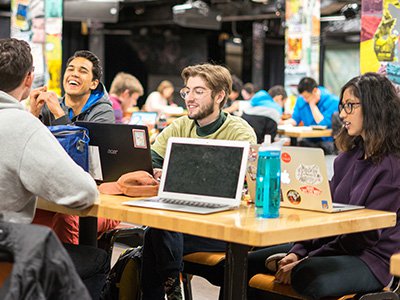
Whole Music Club
When it is not being used for concerts, the Whole Music Club is open for public study space. There are many tables and couches, which makes it perfect for your personal or group study needs.
Outside Goldy’s and Near the Escalator
This study location has chairs and couches that can be used for studying. Vending machines are nearby.
Ground Floor
The Ground Floor Main Study Area
This space has a several chairs, tables, and couches and surrounds the Minnesota Marketplace if you need food while you study.
The UDS Cafeteria
This area is located at the back of the Minnesota Marketplace and has plenty of tables and chairs.
The Cube
Located at the west end of the ground floor, this space has tables and couches for studying and is located next to Starbucks, the Post Office, and the Gopher Express convenience store.
First Floor
Commuter Lounge
Located on the east end of the building near Jamba Juice, this space has computer kiosks, bus schedules, a plasma TV, and vending area with a microwave. It also has a secluded room for quite study spaces.
The East and West Fireplace Lounges
These lounges have comfortable leather couches and chairs. In the winter, this is a great place to nap and lounge near the warmth of a fire. Vending machines are nearby.
The Fountain Terrace
Located at the south end of Coffman, this is a great outdoor study space during the warmer months. Sit on the edge of the Pietro Tacca fountain or on one of the terrace’s many tables or benches.
Third Floor
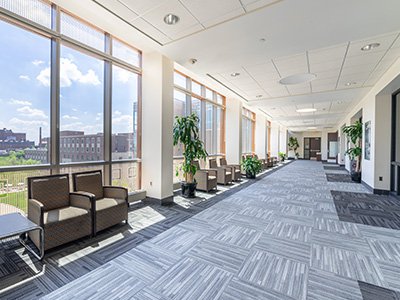
The Mississippi Lounge
With views of the Mississippi River and Fountain Terrace, this lounge is a wonderful place to study. When not reserved for a private event, this location is open to all students. Vending machines are nearby.
Main Hallway
The main hallway on the third floor has many comfortable leather chairs that are perfect for reading. Vending machines are nearby.
Coffman Memorial Union Cultural Centers
To learn more, visit the second floor of Coffman Memorial Union or GopherLink.